Everyday Routines and Meal Timing Patterns
Published: February 2026
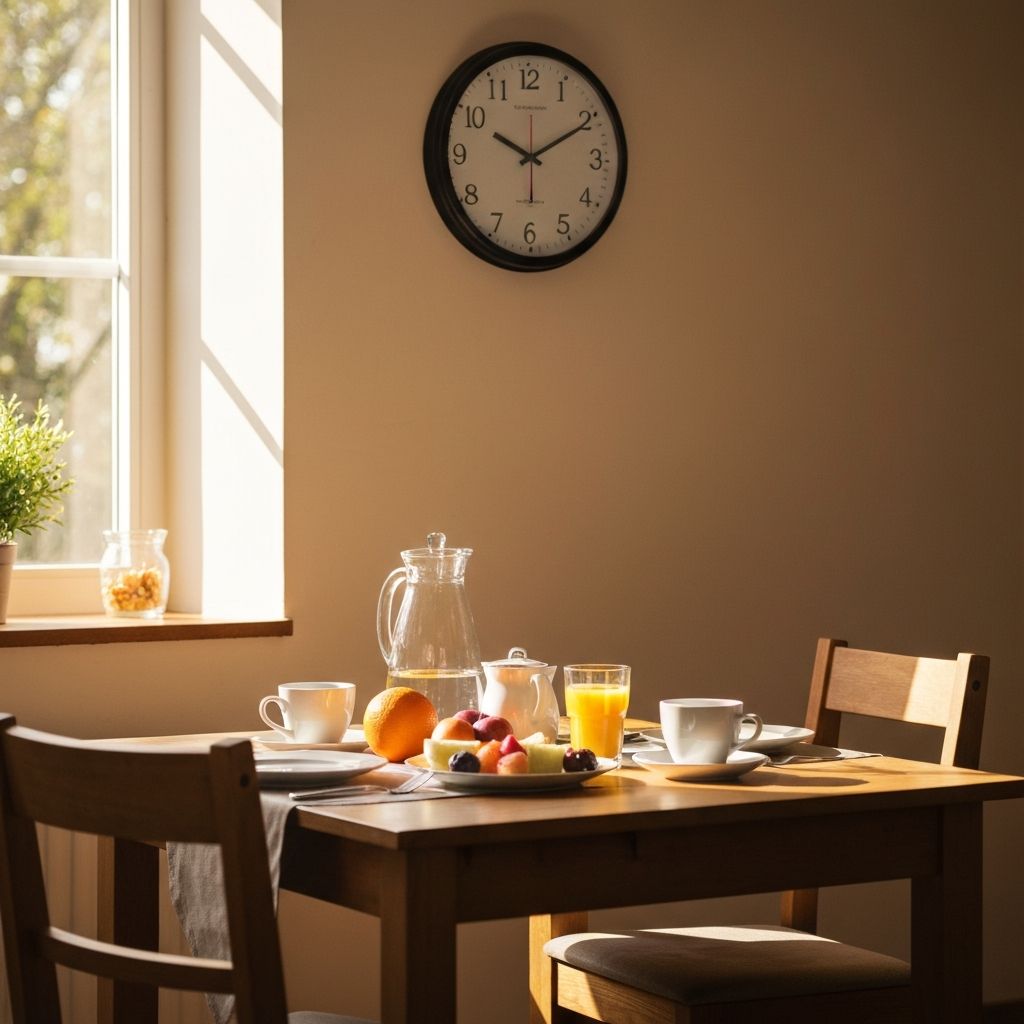
Introduction to Daily Routine Structures
Daily routines form the temporal framework within which eating patterns occur. The structure of a typical day, shaped by work schedules, household responsibilities, and social commitments, creates natural windows and constraints for meal timing.
Understanding these routine structures provides context for why people eat when they do and how timing patterns develop across different lifestyle circumstances.
Morning Routines and Breakfast Timing
Morning routines vary significantly based on work schedules, commute requirements, and household dynamics. Some individuals wake early and have substantial time for breakfast preparation and consumption, while others face time pressure that influences their morning eating patterns.
The timing of breakfast reflects these broader routine constraints. Early morning work commitments may shift breakfast earlier, while flexible schedules might allow for later morning meals. Some people eat breakfast at home, others during their commute or after arriving at work.
Weekend mornings often follow different patterns than weekdays, with more flexible timing and potentially different meal structures reflecting the absence of work commitments.
Midday Meal Patterns and Work Schedules
Lunch timing is frequently influenced by workplace structures and expectations. Standard lunch breaks, whether formal or informal, create common timing windows for midday meals across many occupations.
Work environments vary in how they accommodate lunch. Some workplaces have designated lunch periods, others offer flexible timing. The nature of work itself, whether it allows breaks or requires continuous presence, affects when and how people eat during the day.
Location also matters for midday meals. Some people eat at workplace cafeterias, others bring meals from home, and some leave their workplace to obtain food. Each pattern reflects different routine structures and constraints.
Afternoon Patterns and Snacking Context
The period between lunch and dinner represents various patterns in different lifestyles. Some routines include afternoon snacks, reflecting energy needs or habits developed over time. The availability of food and the structure of the work or home environment influence whether and when afternoon eating occurs.
For those with children, afternoon routines often include after-school snacks as part of household patterns. Work environments vary in their norms and availability regarding afternoon food consumption.
Evening Meal Timing and Household Dynamics
Evening meals often represent a convergence point for household members, though the specific timing varies considerably. Factors influencing dinner timing include work end times, commute duration, after-work activities, and the presence of children with their own schedules.
Families with children may time dinner around school and activity schedules. Adults without children might have more flexible dinner timing based on work patterns and personal preferences. Weekend dinner timing often differs from weekday patterns.
The preparation time required for evening meals also influences when eating occurs. Quick preparation allows for later start times, while more involved cooking may require earlier initiation of meal preparation relative to desired eating time.
Late Evening and Night Patterns
Post-dinner eating patterns vary among individuals and households. Some people conclude eating with dinner, while others include evening snacks as part of their routine. These patterns often reflect long-standing habits, household customs, or responses to hunger cues later in the evening.
Work patterns also influence late evening eating. Shift workers may have meal timing patterns that differ substantially from typical daytime schedules. Those who work late may eat their main evening meal later than others.
Weekend and Holiday Variations
Weekend routines often differ from weekday patterns, with more flexible timing and potentially different meal structures. The absence of work commitments allows for later wake times, more elaborate meal preparation, and social dining that may not fit into weekday schedules.
Holidays and special occasions create their own timing patterns, often featuring meals at times that differ from everyday routines. These occasions reflect cultural customs and family traditions alongside the practical consideration of gathering multiple people.
Individual Variation in Timing Patterns
While broad patterns exist, individual variation is substantial. Personal preferences, hunger patterns, health considerations, and established habits all contribute to when specific individuals choose to eat throughout the day.
Some people prefer eating larger meals earlier in the day, while others eat more later. Some include multiple snacks between meals, others eat only at meal times. These individual patterns develop over time and reflect personal circumstances and preferences.
Cultural and Regional Timing Norms
Cultural backgrounds influence typical meal timing patterns. Different cultures have varying norms regarding when major meals occur during the day. These cultural patterns persist even when people live in regions with different dominant timing norms.
Regional differences within countries also exist. Urban and rural areas may show different typical meal timing patterns. Geographic location affects daylight hours across seasons, which can influence when people eat.
Contextual Factors and Adaptations
Meal timing patterns are not fixed but adapt to changing circumstances. Starting a new job, having a child, relocating to a different region, or other life changes often require adjustments to meal timing within the new routine structure.
People develop strategies to manage meal timing within their constraints. Meal preparation in advance, portable foods for eating on the go, and flexibility in what counts as a meal all represent adaptations to routine demands.
Educational Context About Timing Patterns
Understanding meal timing patterns provides educational context about how eating fits into the structure of everyday life. These patterns reflect the intersection of work demands, household dynamics, cultural norms, and individual preferences.
Timing patterns vary considerably across different circumstances and populations. What is typical in one context may be uncommon in another. This diversity reflects the many factors that shape daily routines and the meals that occur within them.
Educational Context and Limitations
This article provides general educational information about meal timing patterns in everyday life. It describes common patterns and influencing factors but does not constitute advice or recommendations.
Individual circumstances vary greatly, and what is typical or common may not apply to any specific person. Personal decisions about meal timing should be based on individual factors, preferences, and circumstances.
This content is not a substitute for professional guidance regarding health, nutrition, or personal lifestyle decisions.